
Bilingual Preschool Near Me: 7 Things to Look for Before You Enroll

If you've searched "bilingual preschool near me," you already know the results can feel like a wall of similar-looking websites, smiling kids, bright classrooms, and vague promises of "language exposure." The problem is that not all bilingual programs are actually bilingual. Some offer a Spanish song once a week. Others build full dual-language immersion into every part of the day.
The stakes are higher than they might seem. Early childhood is the window when the brain is best equipped to absorb a second language with native-level pronunciation and grammar, a window that narrows significantly after age seven. Choosing the wrong kind of program doesn't just mean a missed marketing promise; it means missing years that are genuinely hard to replicate later with tutoring or weekend classes.
Before you tour a single school, it helps to know what separates a real immersion program from a marketing label, and what questions to ask so you're comparing apples to apples. Here are seven things worth checking before you enroll, whether you're searching in Silver Spring, Bowie, Alexandria, or anywhere else in the DC Metro area.
1. Immersion vs. "Exposure" — Know the Difference
This is the single biggest thing parents miss. "Bilingual" on a preschool's website can mean almost anything.
Exposure programs introduce a second language through occasional songs, flashcards, or a weekly enrichment class, usually 30–60 minutes total per week.
True immersion programs conduct instruction, transitions, meals, and play in both languages throughout the entire day, so children absorb Spanish and English the way they absorb their first language: through constant, natural use.
At BabyFe Bilingual Learning Center, Spanish-English immersion is built into the full daily schedule at all three locations, not layered on as a single weekly activity. When you tour a school, ask directly: "What percentage of the day is conducted in the second language, and in what contexts?" The answer tells you everything.
It's also worth asking how the school handles the transition for children who are hearing a second language for the first time. A well-run immersion classroom doesn't just switch languages and hope children keep up—teachers use gestures, repetition, visual cues, and peer modeling to make meaning clear, so new students settle in within weeks rather than months.
2. Teacher Credentials and Language Fluency
A bilingual classroom is only as strong as the educators leading it. Look for two things: native or near-native fluency in both languages, and formal early childhood education credentials.
Ask whether lead teachers are native speakers or professionally trained in the target language
Ask about staff turnover — consistency matters enormously for language acquisition in young children
Look for leadership with advanced degrees in early childhood education or bilingual pedagogy
BabyFe's founder, Michele Coggins, holds an MA in early childhood education from Teachers College, Columbia University — the kind of credential that signals the program is built on research-backed methodology, not just good intentions.
3. Curriculum and School-Readiness Outcomes
A bilingual preschool should still hit every developmental milestone you'd expect from a strong English-only program: literacy, numeracy, social-emotional skills, fine motor development, just delivered in two languages.
Ask to see a sample weekly curriculum, not just a mission statement
Ask how the school measures kindergarten readiness for bilingual learners specifically
Ask how the curriculum scaffolds vocabulary in both languages simultaneously, rather than treating one as "extra"
Strong programs can show you concrete benchmarks: letter recognition, sound blending, number sense, and expressive language goals in both Spanish and English, tracked over the school year.
Don't be afraid to ask how the school handles a child who's struggling in one language but excelling in the other; a genuinely strong bilingual program treats this as normal, not a red flag, since the two languages often develop at slightly different paces before evening out by kindergarten.
4. Location and Commute Reality
Search intent for "near me" is about convenience, but convenience should never come at the cost of program quality. It's worth widening your radius by a few miles if it means the difference between real immersion and exposure-only.
Silver Spring, MD — 31 Norwood Road
Bowie, MD — 4861 Tesla Drive Ste A
Alexandria, VA — 111 S Alfred Street
Each BabyFe location runs the same immersion model and curriculum standard, so families across Montgomery County, Prince George's County, and the City of Alexandria have consistent access to the same program quality, useful if a move or a change in commute is ever on the horizon.
5. Licensing, Safety, and Before/After Care
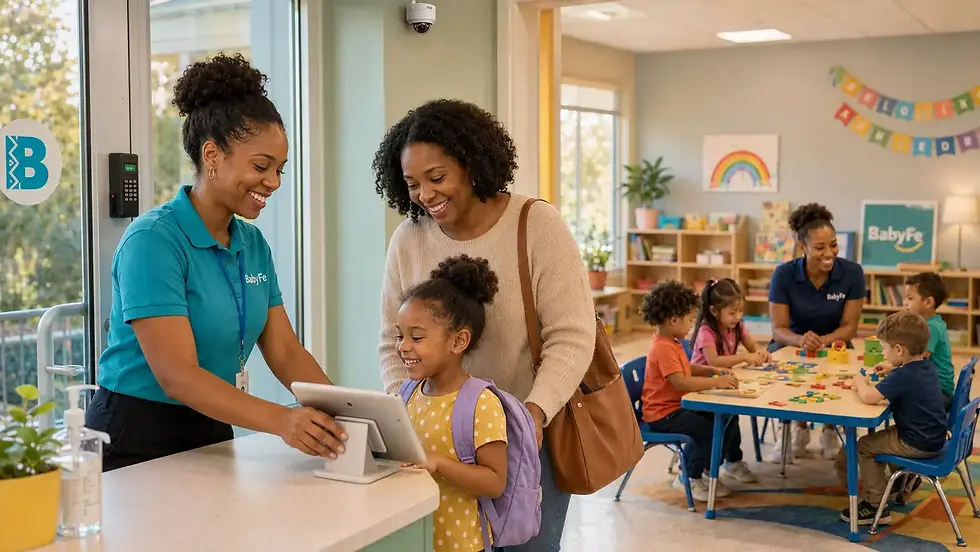
Every state-licensed childcare center meets a baseline safety standard, but the details matter: ratios, background-check policies, security protocols, and whether care extends beyond core preschool hours to fit a working parent's schedule.
Confirm current state licensing status directly (Maryland OCC or Virginia VDOE, depending on location)
Ask about staff-to-child ratios by age group
Ask about security measures, entry protocols, sign-in/sign-out systems, camera access for parents
If your schedule runs earlier or later than a typical preschool day, ask specifically about before-and-after care — it's one of the most common gaps between what a program advertises and what it actually offers.
6. Tuition Transparency
Bilingual immersion programs are often priced at a premium over standard daycare, and that's reasonable given smaller class sizes and specialized staffing — but the pricing should still be clear upfront.
Ask for a full breakdown: tuition, registration fees, supply fees, and any before/after-care add-ons
Ask whether tuition is the same across sibling enrollments or if multi-child discounts apply
Ask what happens to tuition if your child moves up an age group mid-year
A program that hesitates to give you a straight answer on cost is worth a second look before you commit.
7. Tour Availability and What to Actually Look For
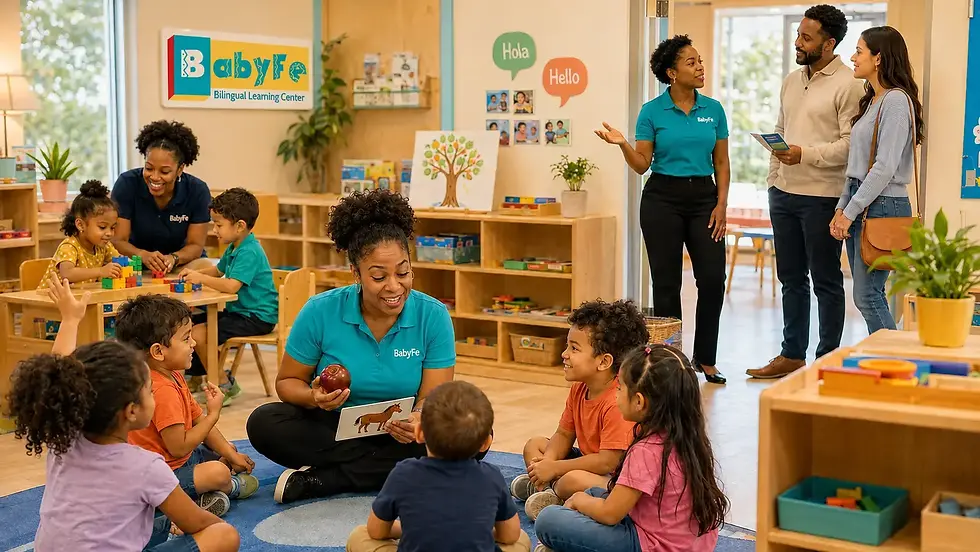
Photos and a website can only tell you so much. A short in-person visit reveals more about a bilingual program than any brochure; specifically, listen for how much of the second language you actually hear used naturally by staff and children, not just displayed on classroom posters.
Ask to sit in on a normal class period, not just a scripted tour
Listen for whether teachers switch fluidly between languages during real interactions — transitions, redirections, playtime, not just during "language time"
Ask about open house dates if a same-day visit isn't available
BabyFe holds regular open house events across its Alexandria, Silver Spring, and Bowie locations, a good low-pressure way to see the immersion model in action before enrolling.
If a tour raises more questions than it answers, that's useful information too. A program confident in its model will welcome detailed questions about staffing, curriculum, and daily language use; one that's uncomfortable with specifics is worth weighing carefully against the alternatives.
Why Parents Choose Immersion Over Exposure
| Exposure Programs | True Immersion (BabyFe Model) |
Second-language time | ~30–60 min/week | All day, every day |
Teacher fluency | Varies, often non-native | Native/near-native, credentialed |
Curriculum integration | Add-on activity | Built into core instruction |
Kindergarten readiness tracking | Rarely bilingual-specific | Tracked in both languages |
The Bottom Line for DC Metro Parents
"Near me" is a fine starting point, but it shouldn't be the deciding factor. The DC Metro area has real depth in Spanish-English immersion options, which means families in Silver Spring, Bowie, and Alexandria don't have to choose between convenience and a program that delivers genuine bilingual fluency.
Use the seven checkpoints above on every school you tour, ask the same questions at each one, and you'll walk away with a much clearer picture of which "bilingual preschool near me" result is actually worth enrolling in.
Frequently Asked Questions
What's the difference between a bilingual preschool and a "language enrichment" preschool?
A bilingual preschool conducts instruction and daily activities in both languages throughout the day. A language enrichment program typically adds a short weekly class in a second language on top of an English-only curriculum.
Is full immersion confusing for young children?
No — research on early childhood language acquisition consistently shows that children under age five absorb multiple languages naturally when exposed consistently, without delaying development in either language.
What ages does BabyFe's immersion program serve?
BabyFe serves infants through preschool-age children across its Silver Spring, Bowie, and Alexandria locations, with consistent Spanish-English immersion at every age group.
How do I schedule a tour?
Contact your nearest BabyFe location directly to schedule a tour or ask about upcoming open house dates.


Comments